TBD Automotive
Project Overview
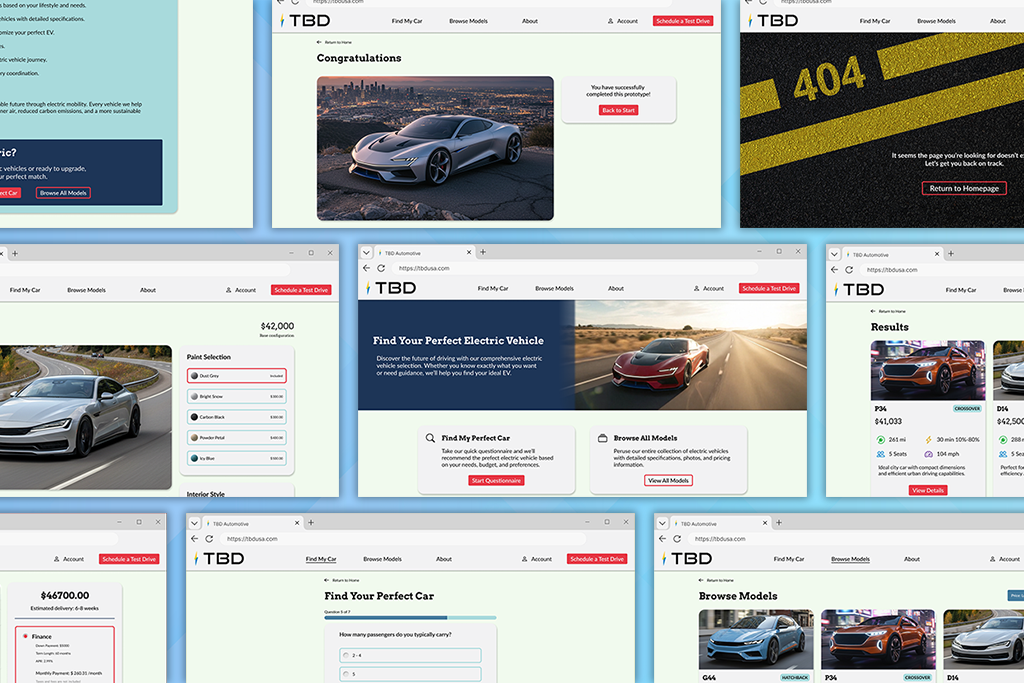
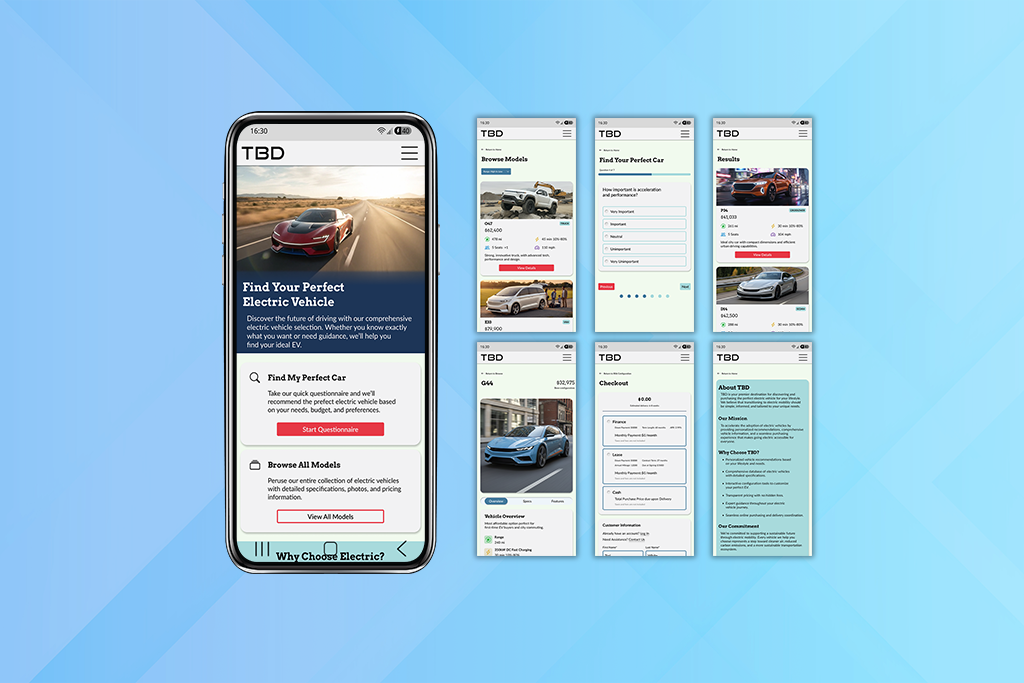
TBD Auto is a fictional direct-to-consumer electric vehicle purchasing platform, created as part of the Google UX Design Specialization course. The task was to create both a mobile and web version of a commerce website.
The Challenge
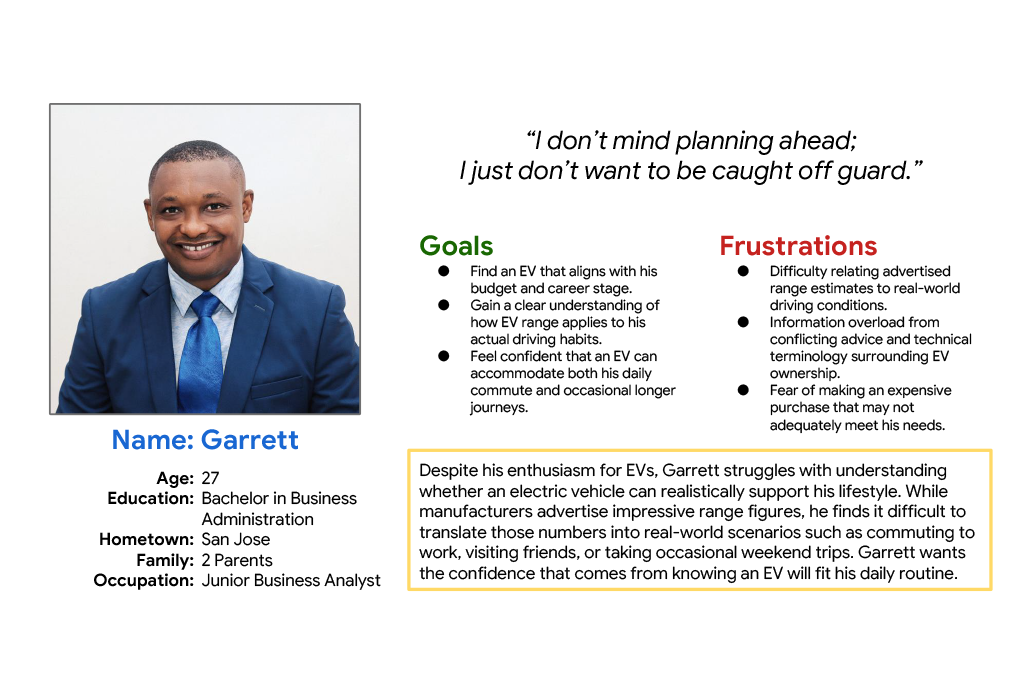
Car buyers are intrigued by what eclectic cars offer: at home charging, less maintenance costs, and more torque. A major factor that hinders the transition to electric vehicle ownership is the range anxiety. Car buyers want to be assured they can perform all the same daily activities, without running out of charge.
The Approach
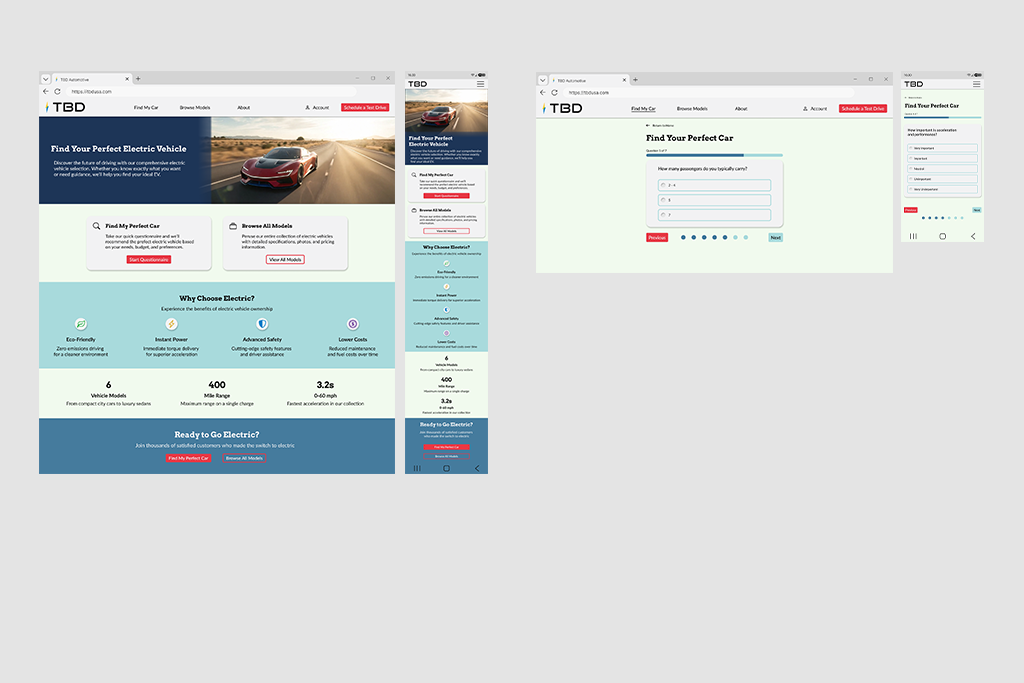
Provide users with a way to compare their current vehicles and driving habits to that of the EVs offered on the website. Moving past the advertised range and kilowatt specs, and focus on real-world use.
Demonstration
- Relying too heavily on familiarity with established brands, hindered design
- User choice applies, not only to products, but to the way they interact with the site
- There still exist limitations when implementing variables and conditions in Figma
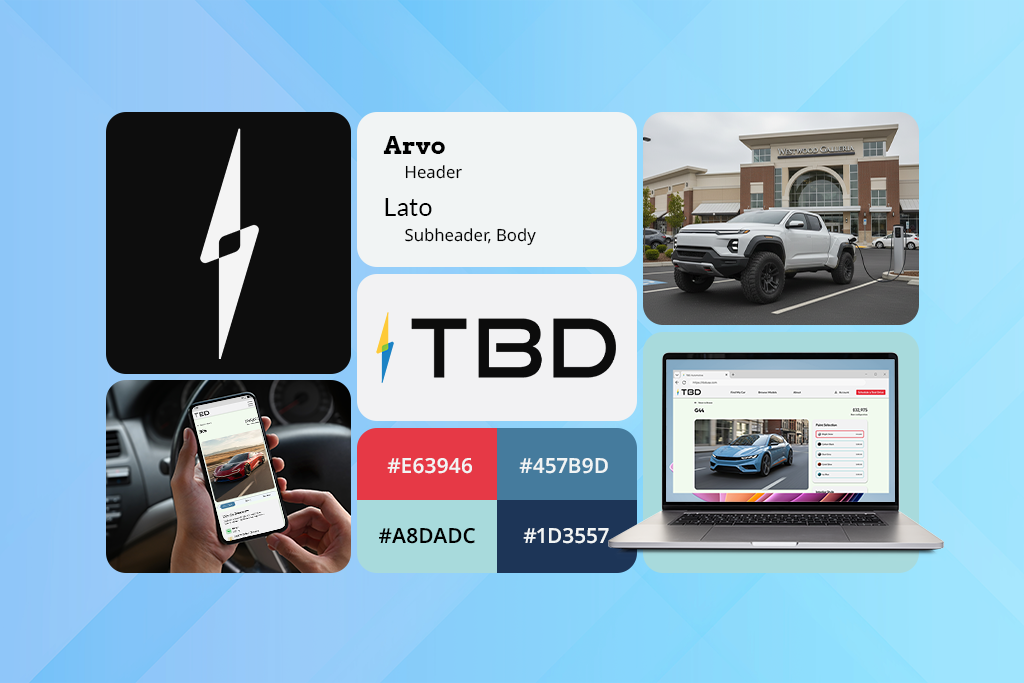
Toolbox
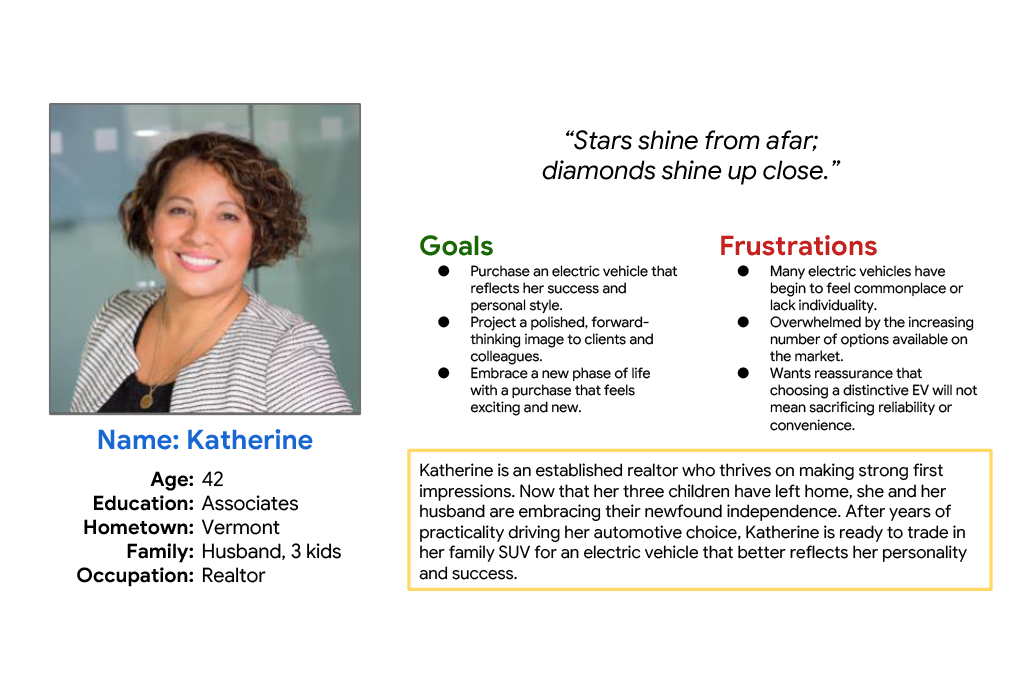
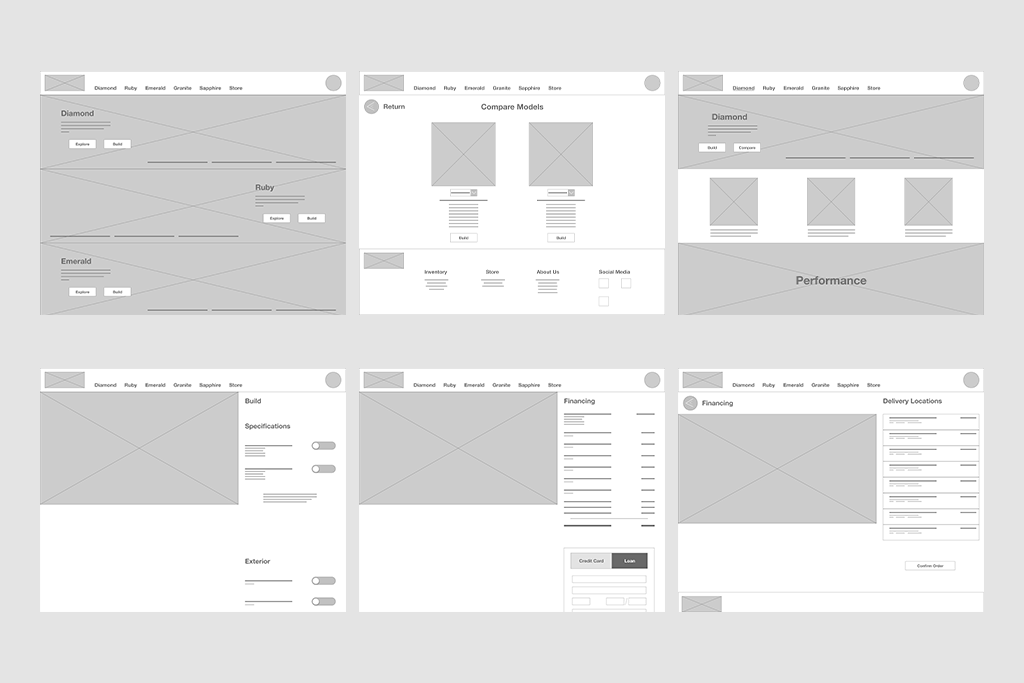
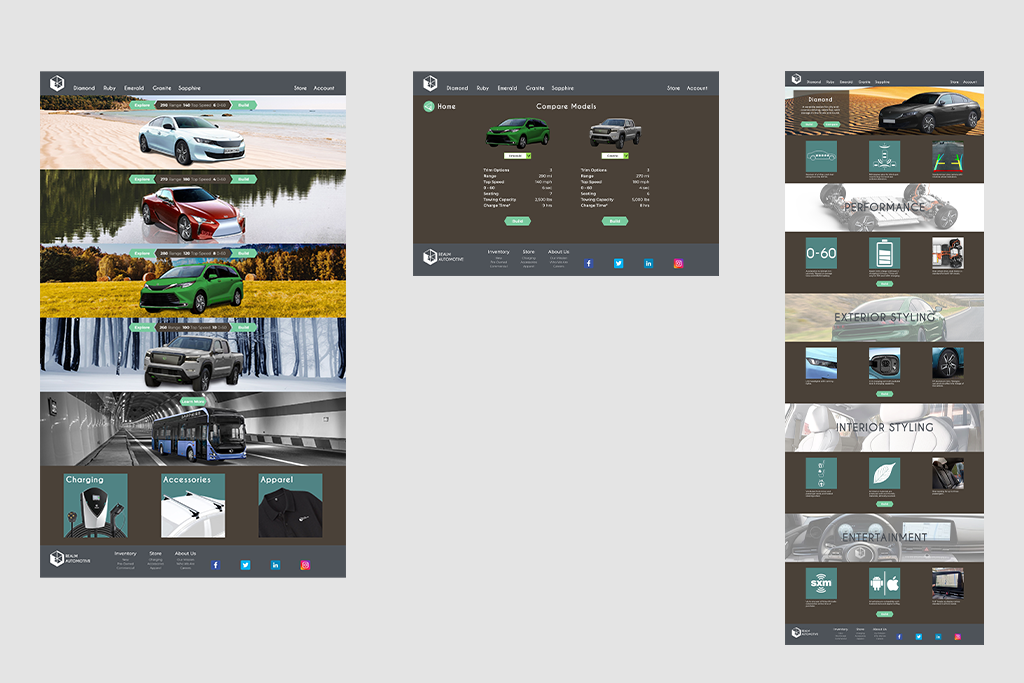
Motivations
Creating an online EV marketplace where consumers can understand high-level specifications in a way that makes sense to them. Allowing users to easily compare vehicle range to their everyday lives.
Direct-to-Consumer
Design an online marketplace to cater to new and first-time EV buyers.
Tailor Selection for User Needs
Account for users’ daily needs to offer them the most ideal car for their lifestyles.
Information Focused Design
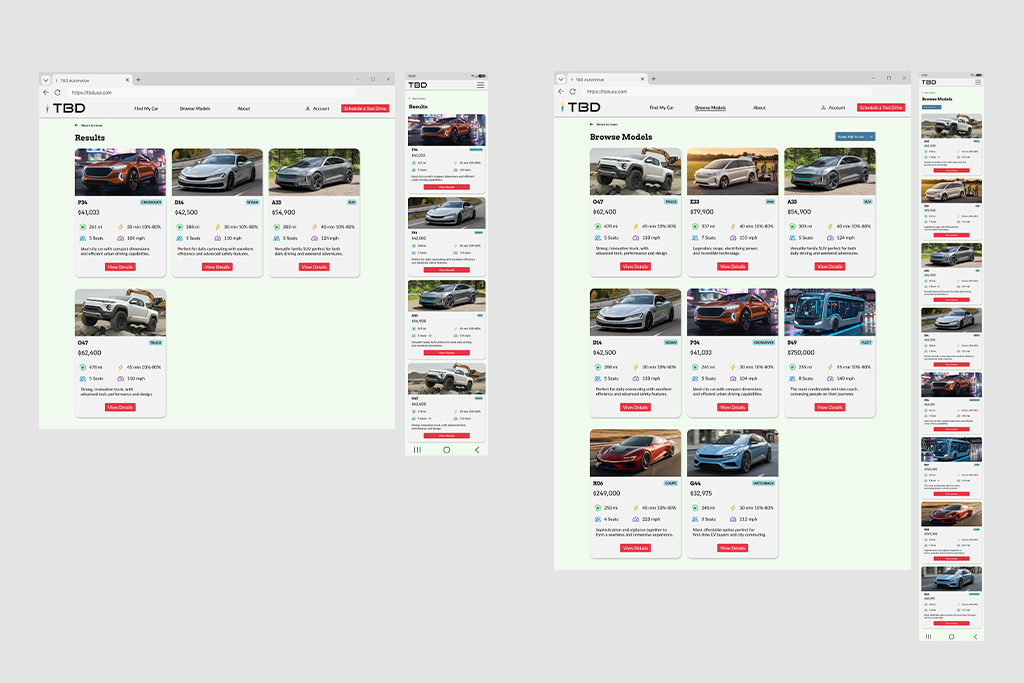
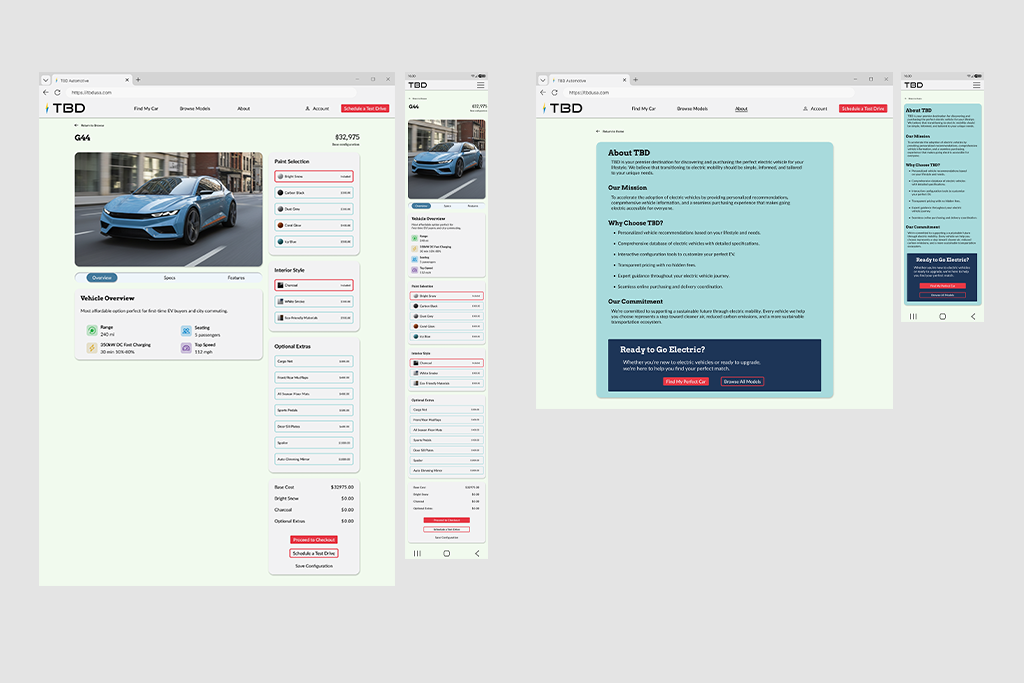
Transparent figures for customers to easily understand and compare model features.
Lessons Learned
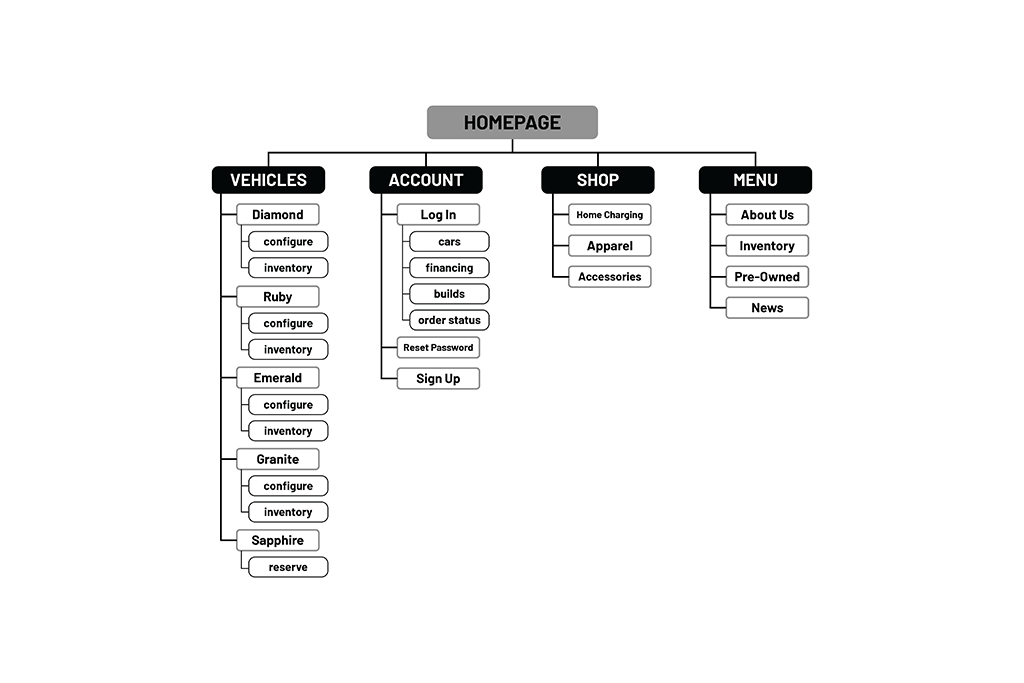
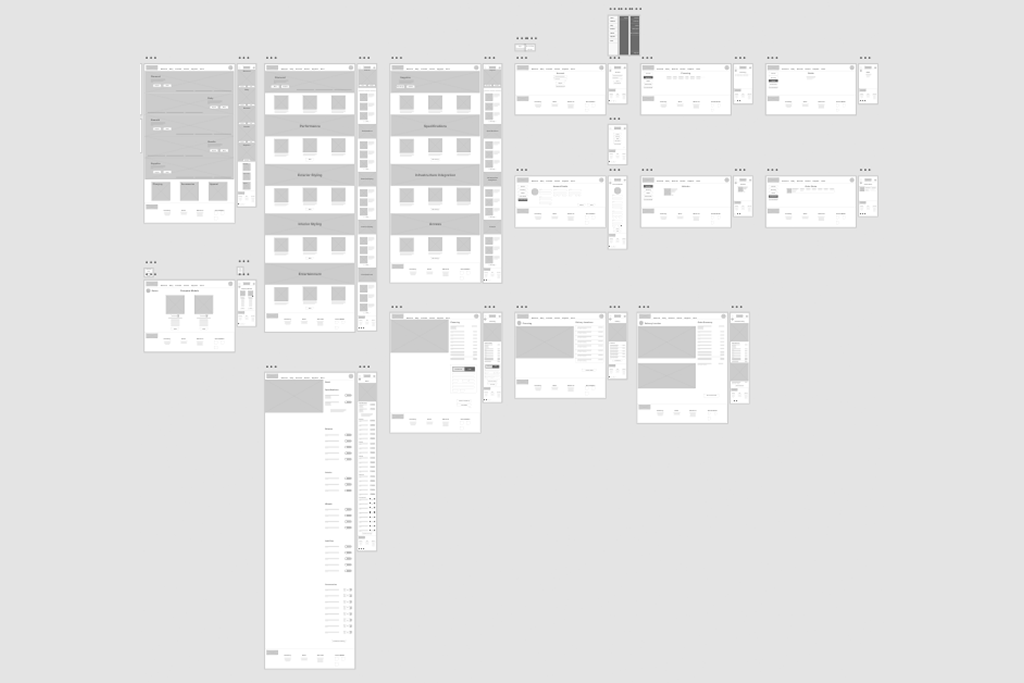
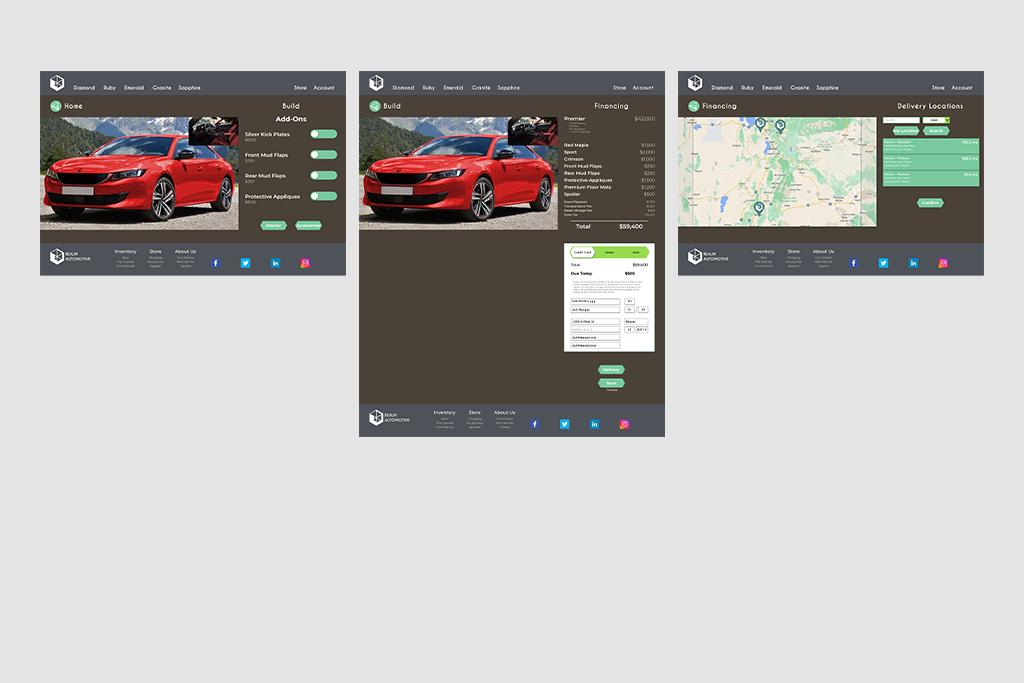
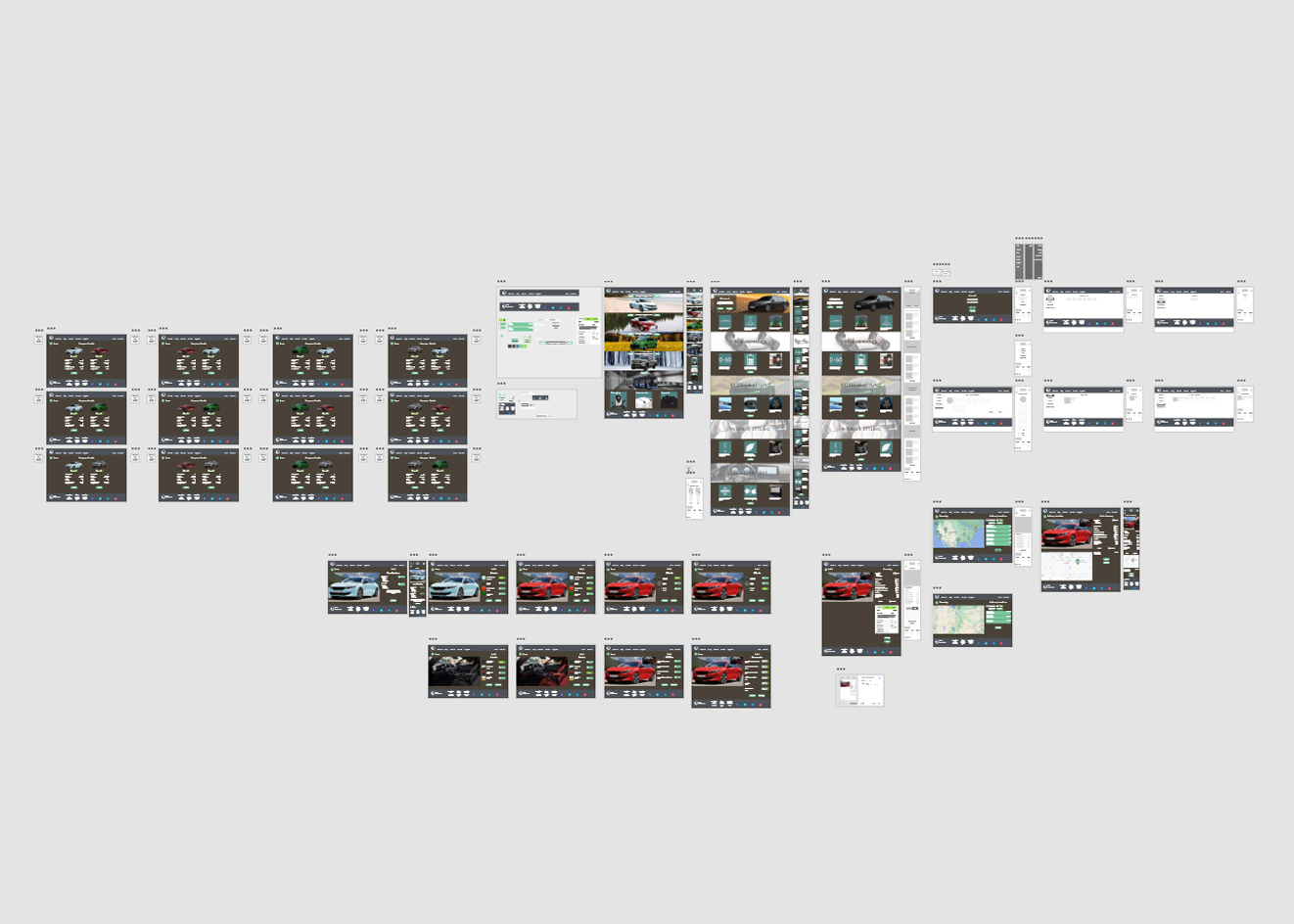
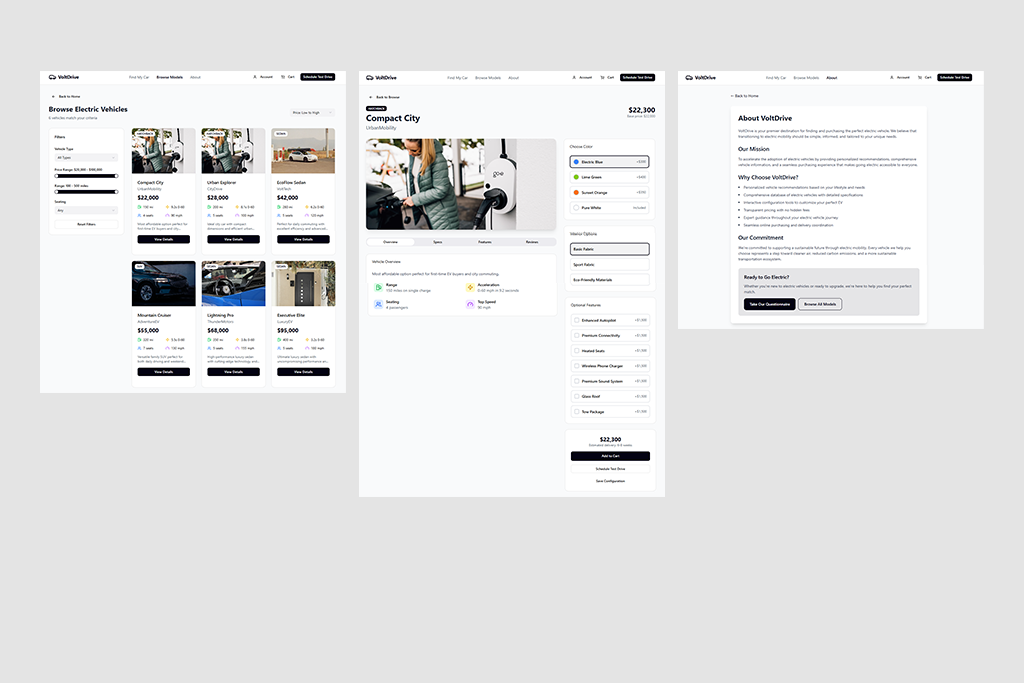
Originally branded Realm Auto, the website was heavily influenced by established car manufacturers in this space. It was meant to compare real world internal combustion engine vehicles to fictional electric vehicles; however, that did not seem like a valid execution. The over use of brand elements in the layout and navigation had a negative effect on the overall aesthetic.
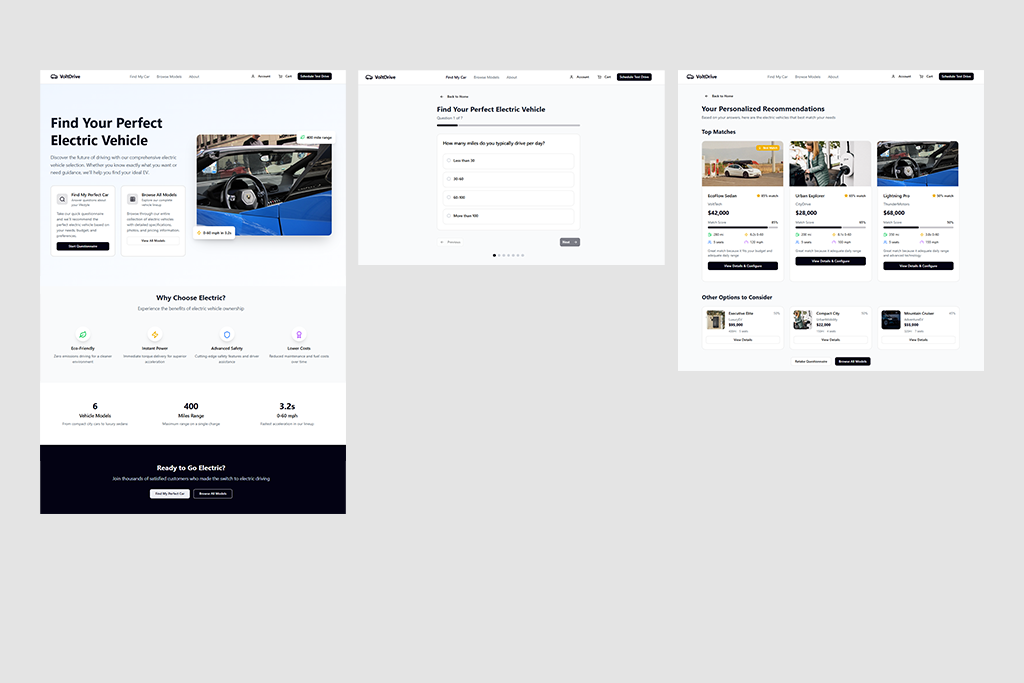
Redesigned as TBD Auto, I utilized Figma Make to quickly ideate on a better execution for relating range and models to certain lifestyle aspects. Users would now fill out a questionnaire to be paired with vehicles that better suited their individual needs. Figma makes use of code to create near functionally complete designs. The design aspect does not include this feature, so elements like filtering and sliders were omitted from the redesign.