Custom Pricing Tool
Project Overview
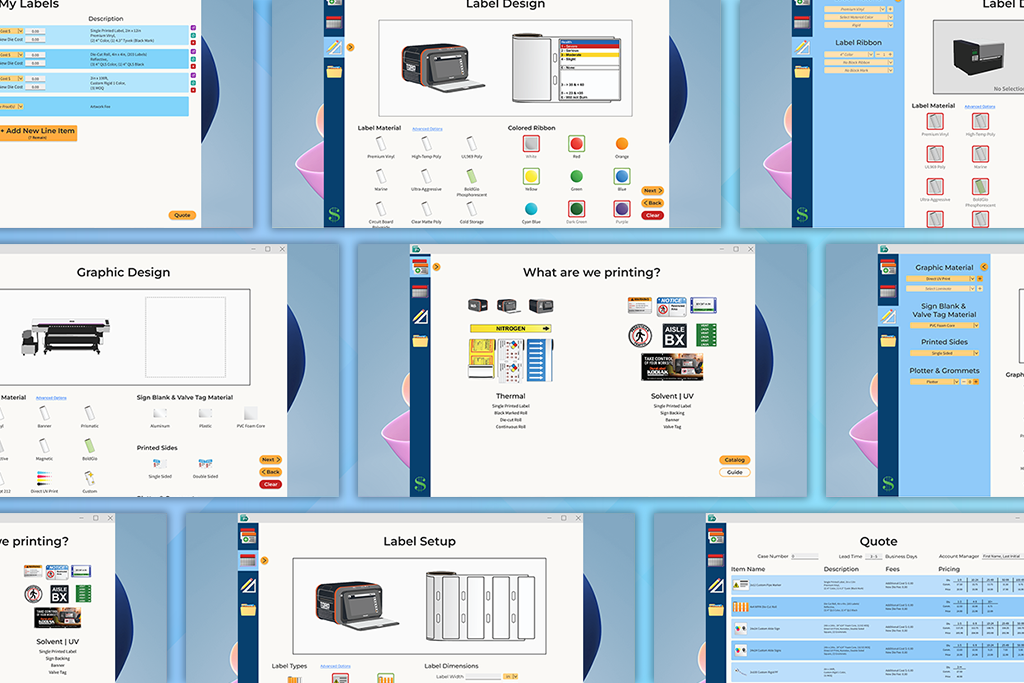
The Engineering Department Director, at my place of work, asked me to reimagine the current internal pricing tool. This is a calculator I use daily to quote customers on custom print jobs. The front-end is a basic UI with drop-downs and fields that are connected to a spreadsheet with values and pricing.
The Challenge
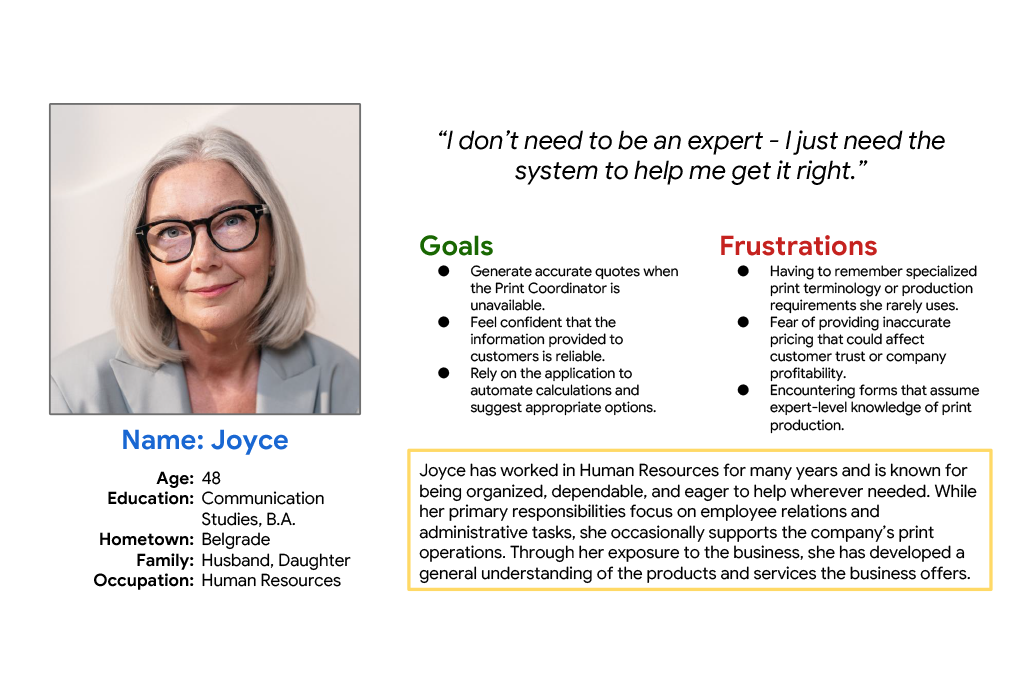
The current pricing tool does not utilize logic, and it relies heavily on the user to have knowledge of print processes. Users without knowledge of thermal printing, solvent printing, or print processes, could provide inaccurate or inconsistent pricing.
The Approach
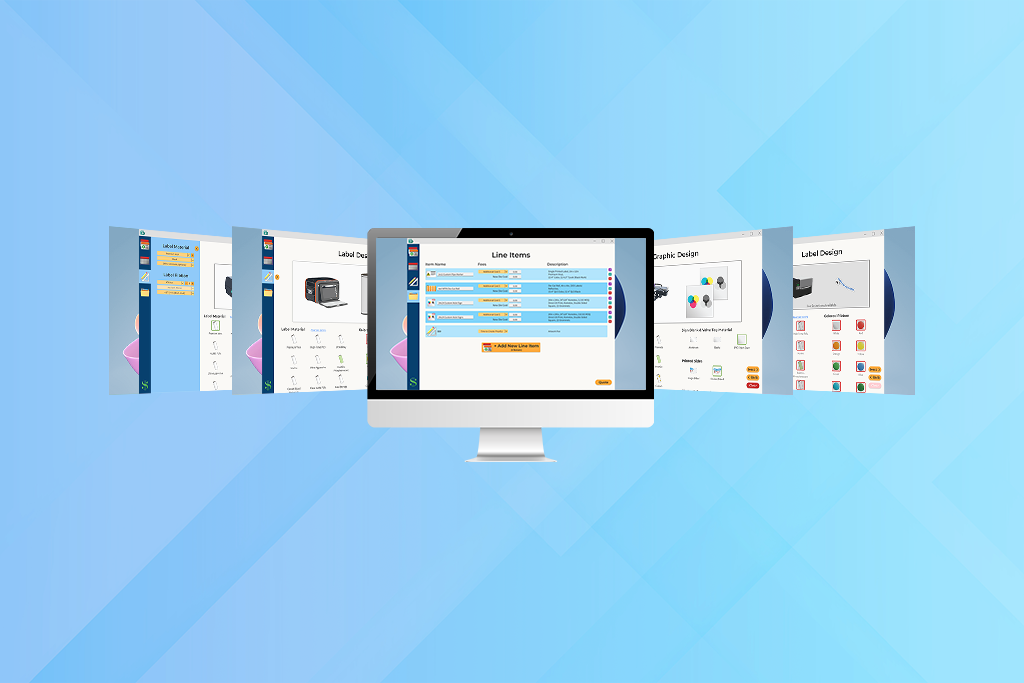
Create a step-by-step visual for users to put together pricing based on the printing process. Instill logic and messaging to guide and explain to users why certain corrections need to be made.
Demonstration
- Enter parameters for 2"x12" pipe marker [single printed label], black premium vinyl, with orange ribbon
- Rename the label
- New Line Item: Toro Printer, 4"x4" die-cut roll, reflective white vinyl, blue ribbon, red ribbon, yellow ribbon, black ribbon
- Rename the label
- New Line Item: 24"x24" foam core sign blank, double sided, two grommets
- Rename both of the newly created line items
- New Line Item: 2"x100" 1 Color Custom RigidTM roll
- Rename the roll
- Remove the signs
- Increase the Artwork Fee [559] to $30.00 (1hr)
- Navigate to the Quote tab
- Enter the Account Manager's name
- Enter the Case Number
- Export the Quote
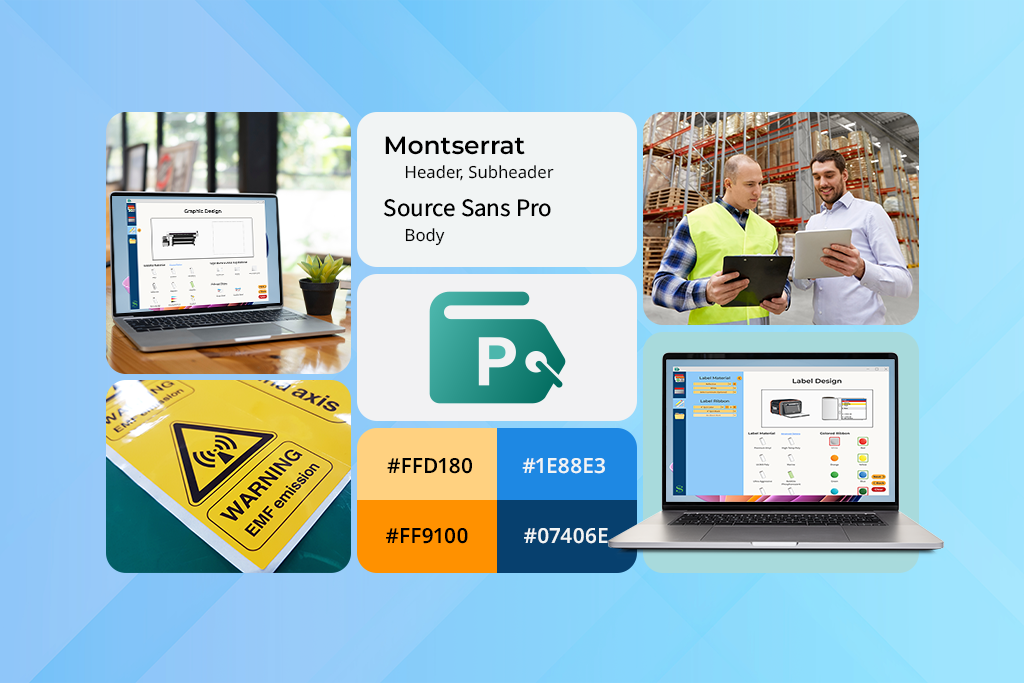
Toolbox
Design Process
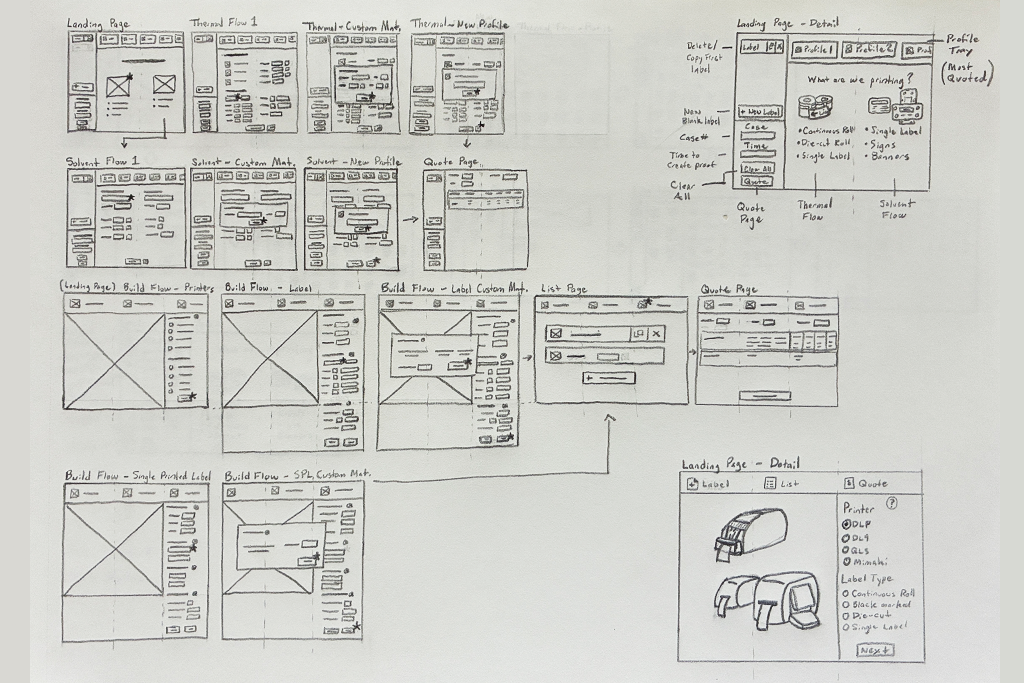
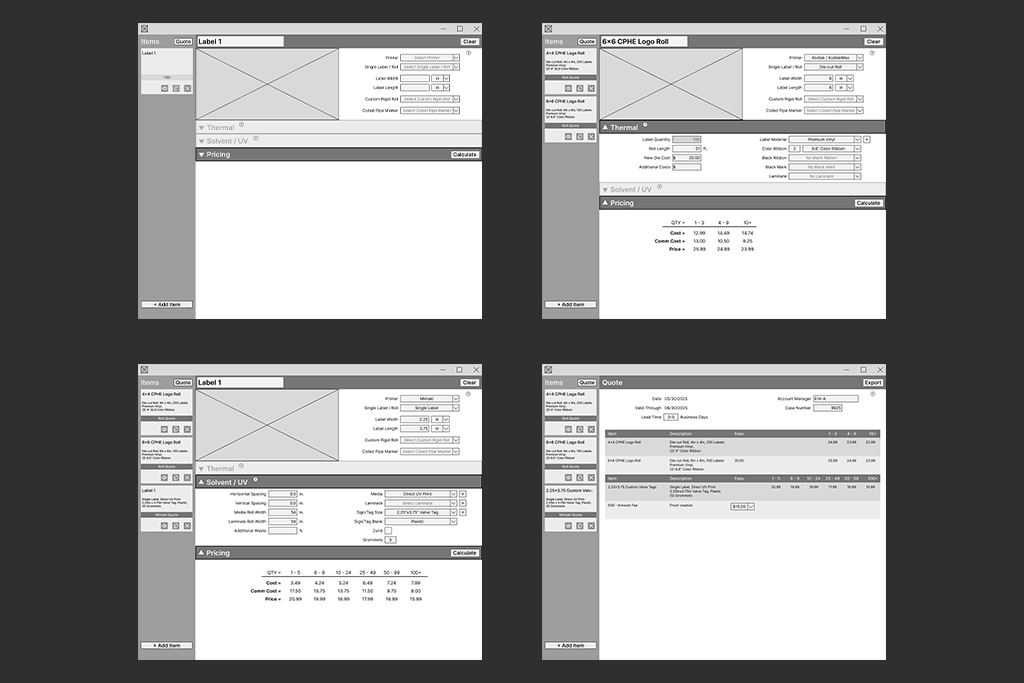
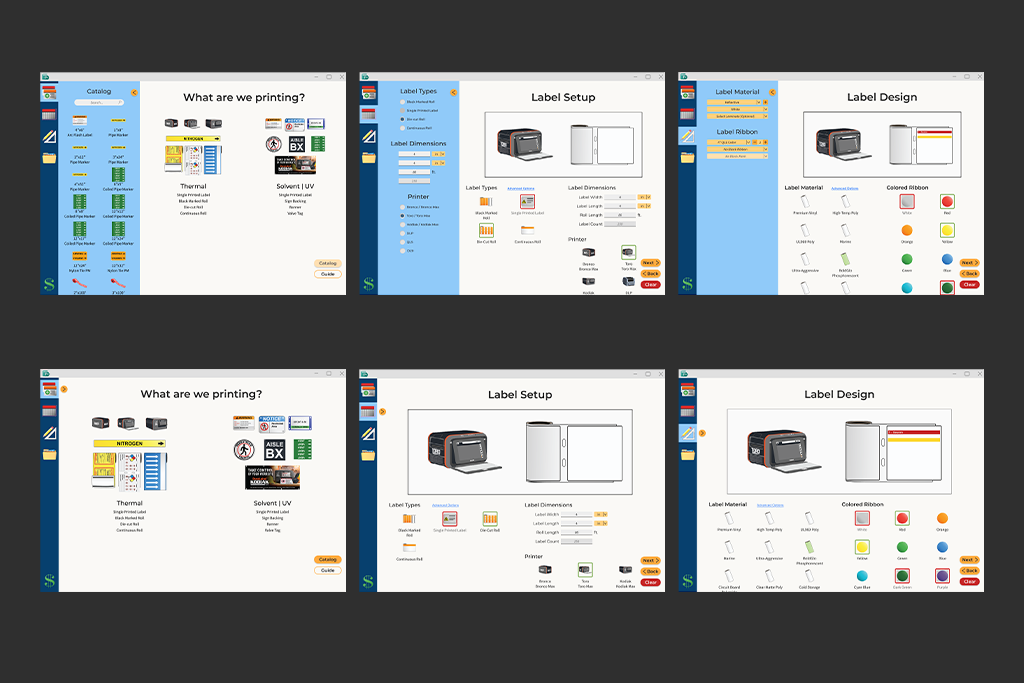
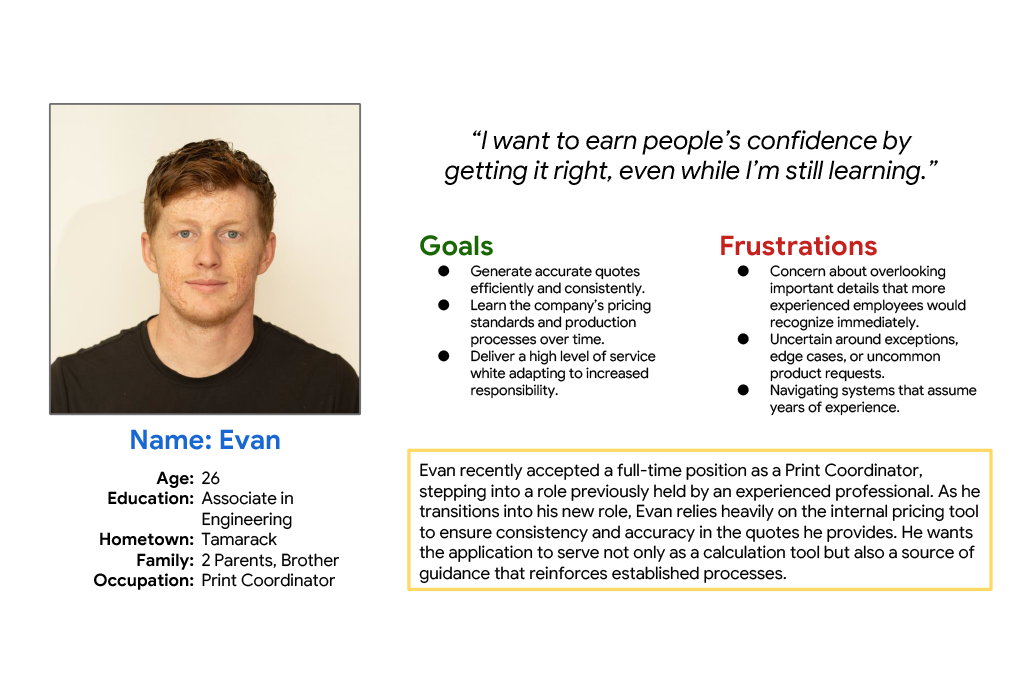
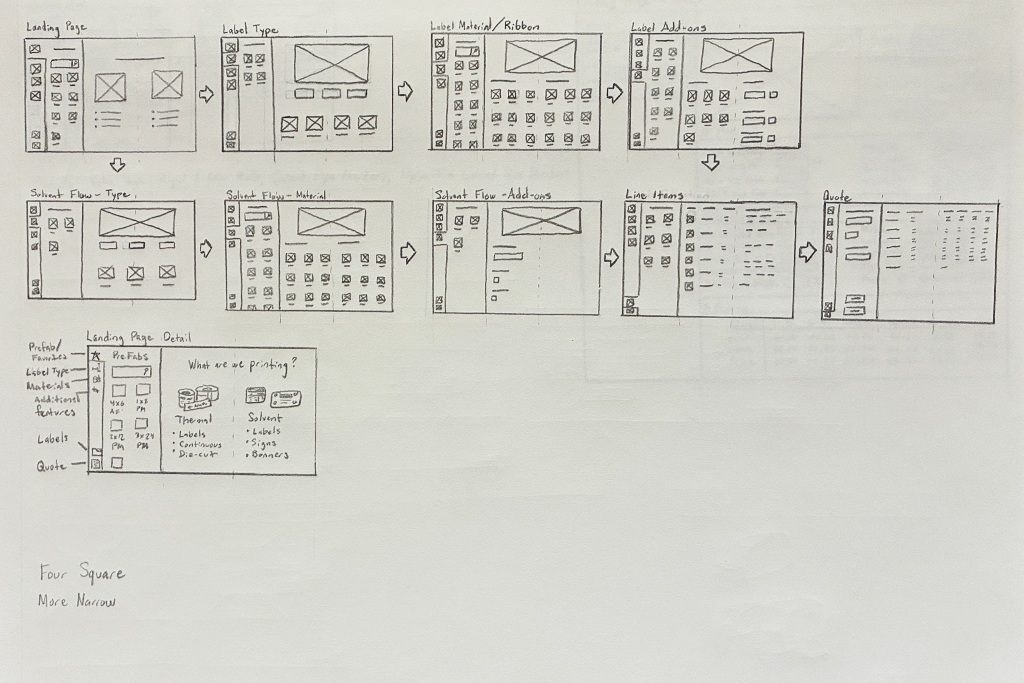
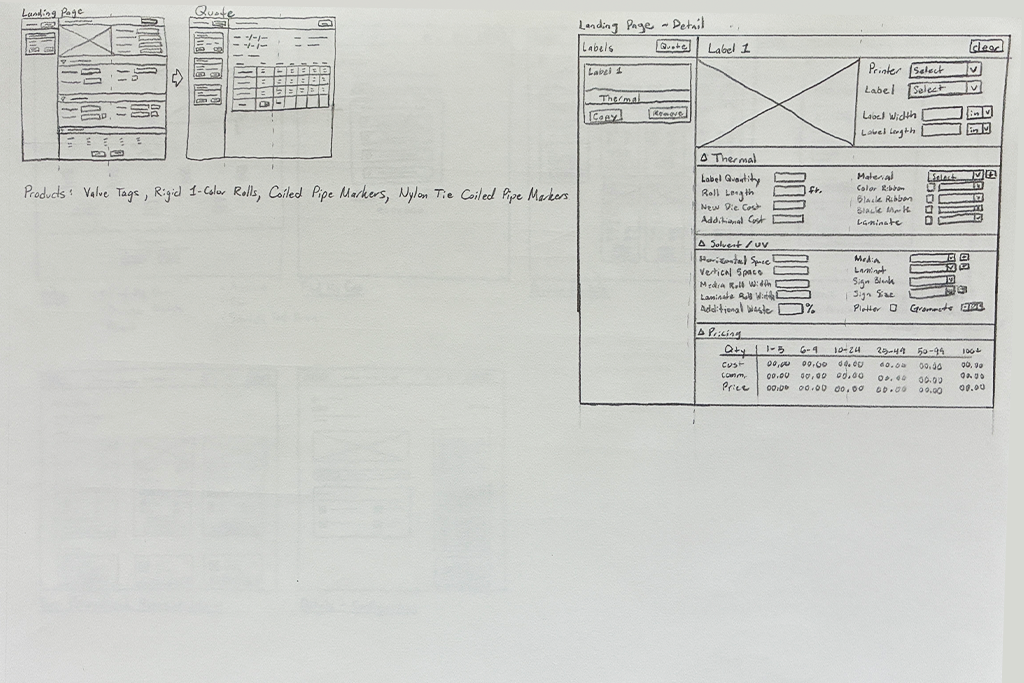
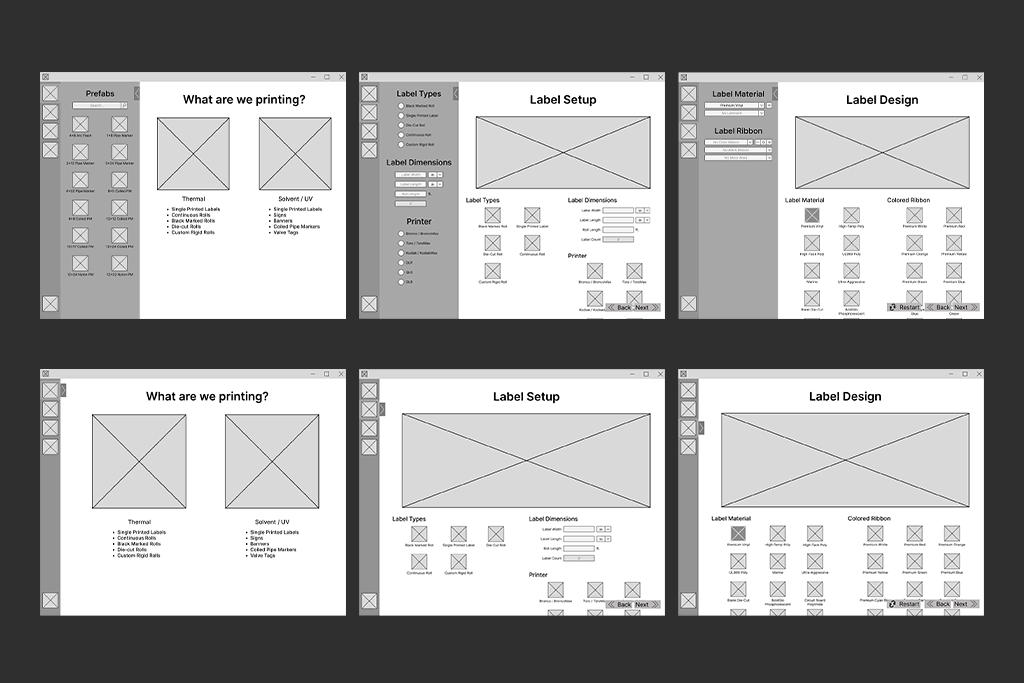
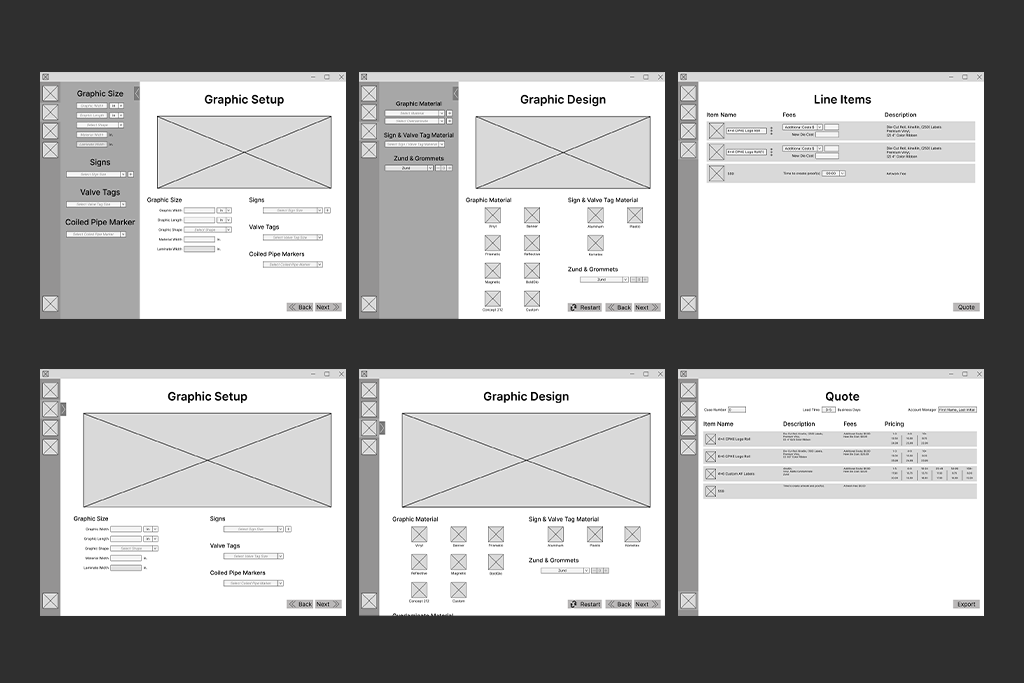
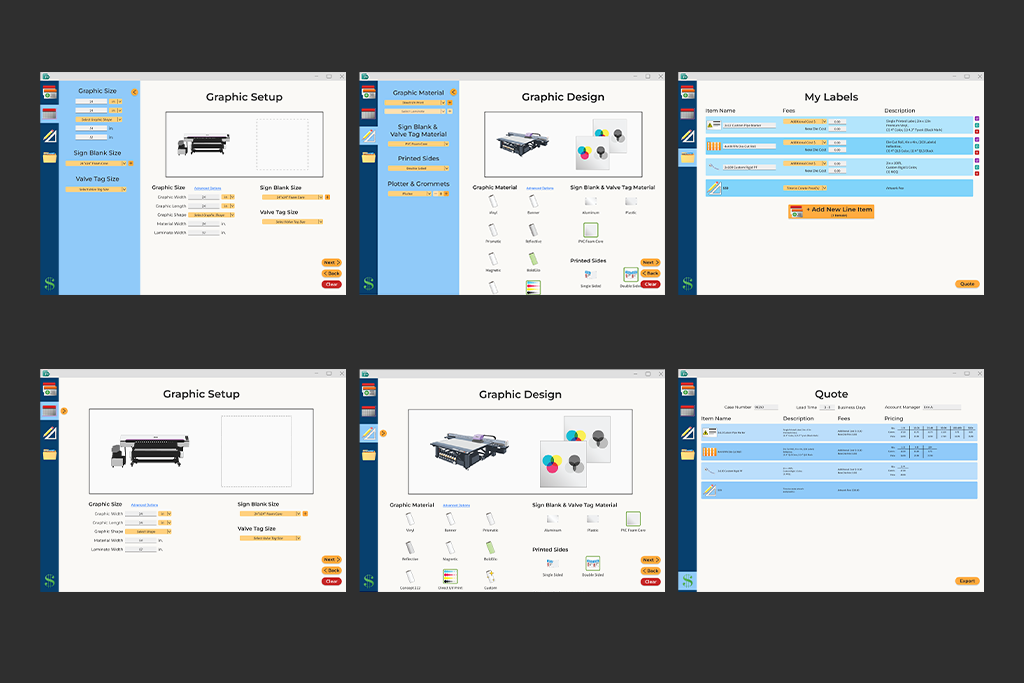
Motivations
Design a pricing tool that can be used by those with little to no knowledge regarding print processes or material constraints. This will allow for custom quotes to be generated if one or more people are absent from the department.
Reduce Quoting Errors
Account for material limitations, various measurement constraints, and color restrictions.
Decrease Turn-Around Time
Provide the Sales Department with the opportunity to quote custom orders on the fly.
Increase Ease of Use
Design an application that could be used by those not familiar with print practices.
Reduce Production Costs
Utilize the same layout and designs from pre-existing application.
Lessons Learned
During the sketching phase, I thought the only thing the current version required was logical expressions to better assist in quoting. I created a step-by-step version and an all-in-one version of the pricing tool. Completing A/B testing, users expressed a desire to see the finished version of the multi-page prototype, rather than the single page application.
Thinking that users may be frustrated, and prefer the quick drop-down and field entry, these aspects were included in the high-fidelity prototype. Only one tester utilized this approach and complained about the amount of scrolling required; the other nine testers preferred scrolling, with one stating that the side bar should be removed. The next steps are to refine further, test with members of the Sales Team, and code a working version.